Mountain Charm: Boutique Hotels in Scenic Peaks
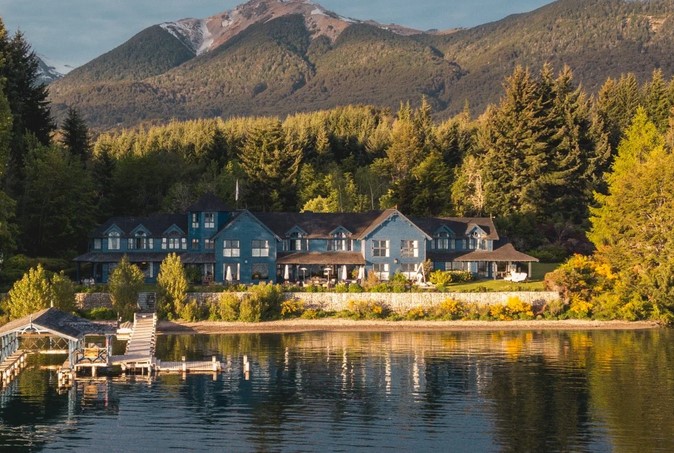
Source:https://boutiquehotels.org
The engine of my 4×4 groaned as I navigated a hairpin turn in the Swiss Alps, the air thinning so rapidly that my bag of potato chips on the passenger seat literally popped from the pressure change. For most travelers, “mountain lodging” conjures images of drafty wooden shacks or massive, impersonal ski resorts that feel like crowded airports with snow. But then, the mist cleared, and I saw it: a cantilevered glass structure clinging to the granite face like a high-tech lichen. No crowds, no buffet lines—just the silence of the peaks and the smell of cedarwood.
In my decade of traversing the world’s most jagged skylines, I’ve discovered that the difference between a “good” mountain trip and a “transformative” one lies entirely in where you rest your head. Choosing boutique mountain hotels isn’t just about luxury; it’s about architectural intimacy and hyper-local immersion.
If you’ve ever felt like a “number” at a giant resort, this deep dive is for you. We’re going to look at why these smaller properties are the future of high-altitude travel and how you can spot a true gem from a marketing gimmick.
Why Boutique Mountain Hotels Redefine the Alpine Experience
Think of a massive ski resort as a mega-mall—efficient, loud, and designed for the masses. In contrast, a boutique mountain hotel is like a bespoke tailor’s shop. It’s smaller, more expensive because of the craftsmanship, and designed specifically to fit the “contour” of the mountain it sits on.
When we talk about boutique mountain hotels, we are usually referring to properties with fewer than 50 rooms. This isn’t just a random number. In the world of high-altitude hospitality, a lower room count allows the staff to monitor something I call The Mountain Microclimate Response.
The “Thermal Envelope” Secret
Technically speaking, high-altitude boutiques invest heavily in a “High-Performance Thermal Envelope.” Unlike older, drafty lodges, modern boutique spots use triple-glazed argon-filled windows and geothermal heating. Why does this matter to you? Because there is nothing worse than paying $400 a night to shiver next to a window while watching the sunset. I always check the R-value (insulation rating) of a building’s materials in their “Sustainability” tab before booking.
What to Look for in Scenic Peak Accommodations
Navigating the world of luxury mountain stays can be daunting for beginners. Here is how I break down the “DNA” of a top-tier property.
1. Architectural Integration (Biophilic Design)
The best boutique mountain hotels don’t just sit on the mountain; they feel like they grew out of it. Look for terms like Biophilic Design or Local Sourcing.
-
The Experience: I once stayed in a property in the Dolomites where the stone in the bathroom was quarried from the very cliff the hotel was built upon.
-
Why it matters: This creates a seamless psychological transition between the outdoors and your room, reducing “travel fatigue.”
2. The “View-to-Privacy” Ratio
This is a technical metric I use constantly. Many hotels promise a “mountain view,” but if that view requires you to leave your curtains open while a hiking trail passes five feet from your window, it’s a failure.
-
Pro Tip: Look for “Stepped Architecture” or “Terraced Suites.” These designs ensure that your balcony is invisible to the guest above and below you.
Iconic Regions for Boutique Mountain Stays
Not all peaks are created equal. Depending on your experience level, you might prefer different “flavors” of mountain charm.
The European Alps (The Gold Standard)
In places like Austria and France, boutique hotels often lean into “Modern Alpine” aesthetics.
-
Keywords: Hygge, Wellness Spas, Farm-to-Table.
-
My Insight: These hotels often have a “Mudroom Culture.” A high-end boutique will have heated lockers for your boots—not in a basement, but integrated into a lounge where you’re served hot cider the moment you unbuckle.
The Andes (The High-Altitude Frontier)
In South America, specifically Chile and Peru, boutique stays are often “Off-Grid” or “Eco-Pods.”
-
The Challenge: Oxygen levels.
-
The Boutique Advantage: Many luxury boutique hotels here offer Oxygen-Enriched Air in the suites. A massive resort can’t afford to pump oxygen into 500 rooms, but a 12-room boutique certainly can.
Expert Advice: Tips and Hidden Warnings
After 10 years on the road, I’ve seen the “Instagram vs. Reality” gap firsthand. Here is my “Blogger’s Bible” for booking boutique mountain hotels.
The “Sun Trajectory” Warning
Before you book that “Sun-Drenched Suite,” check a map. If the hotel is on the North-facing slope of a deep valley, the sun might disappear behind a peak by 2:00 PM. I use an app called SunSeeker to overlay the sun’s path onto a hotel’s GPS coordinates. If you’re paying for a view, make sure you actually get to see it in the light.
Pro Tip: The “Shoulder Season” Strategy
Mountain boutiques are notoriously expensive during “Peak Season” (December–February for skiing; July–August for hiking).
-
The Secret: Book during the “Shoulder Season” (late September or May).
-
The Reward: Not only are rates 30-50% lower, but the staff-to-guest ratio often drops to 2:1. I’ve had hotel owners personally lead me on secret mushroom-foraging hikes because I was one of only three guests in the building.
Beware the “Pseudo-Boutique”
Many large hotel chains are launching “Boutique Collections.” While they look the part, they often lack the soul.
-
How to tell: Look at the wine list. A true boutique mountain hotel will feature vineyards from the foothills of that specific range. If they’re serving a generic mass-market Chardonnay, it’s a corporate hotel in a mountain costume.
The Technical Side: Logistics of High-Altitude Stays
For intermediate travelers looking to go deeper, let’s talk about the logistics that can make or break your trip.
-
Transfer Services: Boutique hotels in scenic peaks are often inaccessible by standard rental cars. Always ask: “Is the final mile paved, and do you provide a 4×4 shuttle?” I’ve seen many a sedan get stuck in the mud of a “charming” mountain path.
-
Connectivity vs. Disconnect: Some boutiques pride themselves on “Digital Detox” (no Wi-Fi). If you’re a digital nomad, this is a nightmare. Always verify the Starlink availability if you need to stay connected at 10,000 feet.
Summary: Finding Your Peak
Choosing the right boutique mountain hotels is an investment in your mental well-being. There is a specific type of clarity that comes from being perched on a scenic peak, wrapped in a high-thread-count duvet, watching the clouds dance below your balcony. It’s an experience that a 500-room hotel simply cannot replicate.
Remember, the mountain doesn’t care about your followers or your status—but the right boutique hotel certainly does. They are the gatekeepers to the wilderness, providing a bridge between the raw power of nature and the refined comforts of home.
Are you a “Snow-Capped Peaks” person or a “Lush Green Highlands” traveler? Have you found a hidden boutique gem that the rest of the world hasn’t discovered yet? Let’s talk in the comments below—I’m always looking for my next 4×4 adventure!