Stillness in the Woods: Forest Meditation Retreats Worldwide
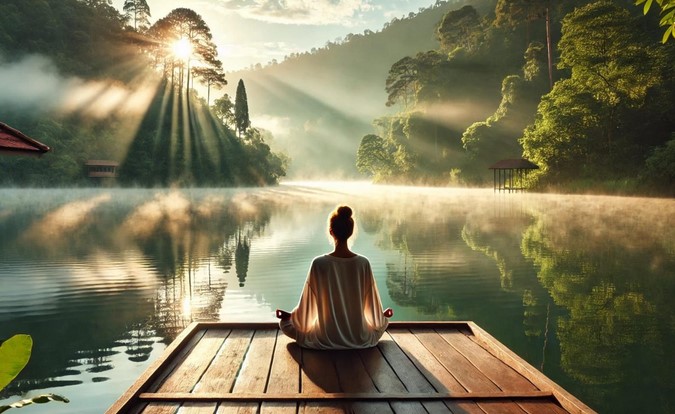
Source:https://outinstl.com
You are sitting on a moss-covered log, the air smells of damp pine and ancient earth, and for the first time in three years, your phone isn’t buzzing. Then, the panic hits. Without the constant drip of notifications, your brain starts to scream in the silence. This “quiet-induced anxiety” is the modern traveler’s greatest hurdle, yet studies show that just 120 minutes a week in nature can significantly lower cortisol levels. The problem? Most people “visit” the woods, but they don’t know how to stay there.
In my decade of traversing the world’s wilderness, from the dense jungles of Sumatra to the cedar groves of Japan, I’ve learned that forest meditation retreats are the ultimate software update for the human mind. I remember my first silent retreat in the Black Forest; I spent the first two days mentally writing emails. It wasn’t until I learned to synchronize my breath with the swaying of the canopy that the “noise” finally stopped. That is the moment you stop being a tourist and start being a part of the ecosystem.
The Science of Shinrin-Yoku: Why the Woods?
To the uninitiated, forest meditation might sound like “hugging trees.” To a technical researcher, it is Shinrin-yoku (Forest Bathing), a practice developed in Japan in the 1980s. When you walk through a forest, you are inhaling Phytoncides—antimicrobial allelopathic organic compounds derived from plants.
Think of a forest like a natural pharmacy with a 360-degree surround-sound system. The trees aren’t just standing there; they are emitting chemicals to protect themselves from rotting and insects. When we breathe these in, our bodies respond by increasing the activity of “Natural Killer” (NK) cells, which boost our immune system. It’s like plugging your body into a slow-charger that repairs your cells while you simply sit and breathe.
Global Destinations for Forest Meditation Retreats
If you are ready to trade screen time for “green time,” these are the regions where the art of the retreat has reached its technical and spiritual peak.
1. Nagano, Japan: The Birthplace of Forest Bathing
Japan offers the most structured forest meditation retreats. The Akasawa Natural Recreational Forest is a masterclass in “Healing Forests.”
-
The Experience: These retreats often involve a Kikori (woodsman) guide who teaches you to identify the scent of Hinoki cypress.
-
The Insight: I’ve found that the Japanese approach is highly technical. They measure your blood pressure before and after the walk to show you the physical data of your “stillness.”
2. The Pacific Northwest, USA: The Cedar Sanctuaries
In the moss-draped forests of Oregon and Washington, retreats focus on Mindfulness-Based Stress Reduction (MBSR) within old-growth ecosystems.
-
Technical Detail: The high humidity in these temperate rainforests keeps the Aero-ion count high. Negative ions are abundant near moving water and dense forests, which are believed to increase serotonin levels.
-
The Vibe: It’s raw, damp, and incredibly grounding. Perfect for intermediate practitioners who want to test their focus in misty, low-visibility environments.
3. The Himalayan Foothills, India: Spiritual Altitude
Retreats in places like Rishikesh or Dharamshala blend forest stillness with Vedic philosophy.
-
The Difference: Here, meditation is often paired with Pranayama (breath control). Practicing breathwork in high-altitude pine forests increases your Lung Capacity Efficiency and forces a deeper state of presence.
Navigating the Technical Side: Gear for Stillness
You might think you don’t need “gear” to sit in the woods, but after ten years, I can tell you that the wrong equipment is the fastest way to ruin your zen.
-
Thermal Regulation: When you sit still for an hour, your body temperature drops. I always use a Merino wool base layer. It manages moisture (sweat) while providing a high Clo-value (thermal resistance) to keep you warm without the bulk of a heavy jacket.
-
The “Zabuton” Alternative: If your retreat requires hiking into the woods, a traditional heavy cushion won’t work. Look for an inflatable sit-pad with a high R-value. This protects your spine from the cold dampness of the ground, which would otherwise pull heat away from your body via conduction.
-
Acoustic Transparency: If you use a hood, ensure it is made of a “quiet” fabric. Hard-shell Gore-Tex crinkles every time you breathe, which can be incredibly distracting during deep meditation. Use a soft-shell or fleece hood to maintain acoustic clarity.
Expert Advice: Professional Secrets for Deep Presence
After years of leading and joining retreats, I’ve developed a “Stillness Protocol” for those who struggle to switch off.
Tips Pro: The “Fractal” Focus
When your mind starts to wander, look at the trees—specifically the branching patterns. Nature is full of Fractals (complex patterns that repeat at different scales). Research suggests that looking at these patterns triggers a “wakefully relaxed” state in the human brain. It’s like visual white noise that helps the “Monkey Mind” settle down without effort.
Beware of “Nature Deficit Rebound.” If you spend 5 days in a silent forest and immediately jump into a busy airport, you will experience a sensory overload that can cause intense irritability or migraines. The “Buffer” Rule: Always schedule 24 hours of “low-stimulus” time (no social media, quiet hotel) before reintegrating into the city.
Scannable Checklist for your Forest Retreat
-
Duration: For beginners, a 3-day retreat is the “sweet spot.” It takes 24 hours for the adrenaline to leave your system and 48 hours for your senses to sharpen.
-
Footwear: You need “Ground-Feel” shoes or minimalist trail runners. Standard heavy hiking boots disconnect you from the terrain. You want to feel the roots and the soft earth beneath your feet.
-
Insect Protection: Use Permethrin-treated clothing rather than heavy DEET sprays. Strong chemical smells interfere with the olfactory benefits of the phytoncides.
-
Connectivity: If the retreat doesn’t have a “Phone Lockbox,” make your own. Switch your phone to Grayscale mode. Removing the color takes away the “dopamine hit” of the icons and makes the green of the forest look even more vibrant.
The Sustainable Impact of Forest Retreats
By participating in forest meditation retreats, you are participating in Conservation Tourism. Many of these retreats are located on private lands or within community-managed forests. Your retreat fee makes the forest more valuable “standing” than it would be as timber.
Furthermore, many retreats now incorporate Restorative Ecology. You might spend an hour a day removing invasive species or planting saplings. This creates a “reciprocal relationship”—you heal the forest, and the forest heals you.
Conclusion: The Forest is the Teacher
We often go to the woods to “get away,” but the real goal of forest meditation is to “get back.” It is a return to a baseline that our ancestors knew instinctively. When you sit in the stillness long enough, you realize that the forest isn’t silent at all—it’s speaking in a language of scent, wind, and shadow.
If you could disappear into any woods tomorrow, would it be the misty pines of the Pacific Northwest or the ancient cedar groves of Japan? What is the biggest “noise” in your life right now that you need to leave behind? Let’s share our paths to stillness in the comments below.