Trails of the Wild: Mountain Treks with Wildlife Encounters
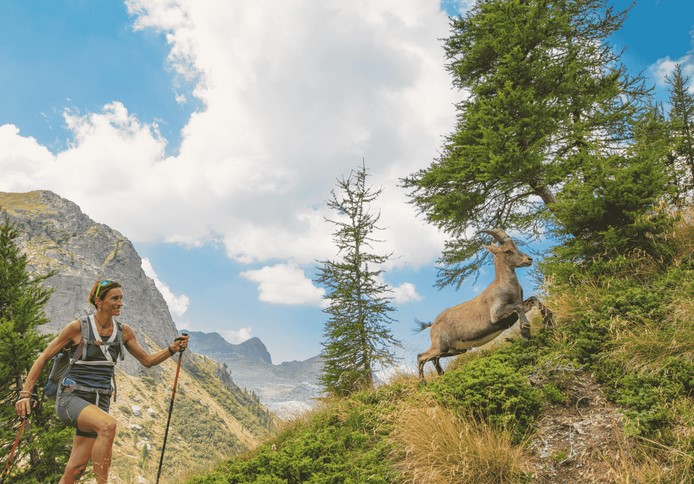
Source:https://wanderlusters.com
The snap of a dry twig echoed like a pistol shot through the thin Himalayan air. I froze, my boots half-submerged in the crunching scree. Less than fifty yards away, a Snow Leopard—the “Grey Ghost” of the peaks—turned its head, its eyes an icy, piercing yellow that seemed to look right through my Gore-Tex jacket. In that moment, the thousands of dollars spent on gear and the weeks of grueling incline didn’t matter. I wasn’t just a tourist; I was a guest in a high-altitude sanctuary.
Most hikers hit the trail looking for a “view,” but after a decade of leading expeditions across the world’s most rugged ranges, I can tell you that a view is just a postcard. A mountain wildlife trek, however, is a conversation. It’s the difference between looking at a painting and stepping inside the artist’s studio.
If you’re tired of crowded trails where the only “wildlife” is a stray dog at the summit, it’s time to elevate your game. This guide is designed to take you from a casual walker to a mindful tracker.
The Magnetism of Mountain Wildlife Treks
Why do we seek out these encounters? It’s about the adrenaline of the unpredictable. Unlike a zoo, where animals are static, mountain ecosystems are dynamic. When you engage in mountain wildlife treks, you are entering an environment where the residents have evolved over millennia to survive conditions that would kill a human in hours.
Think of a mountain ecosystem like a multi-story department store. The “Basement” (the valley) is crowded and lush. As you go up the “Elevator” (increasing altitude), the selection gets thinner, more exclusive, and much tougher. By the time you reach the “Penthouse” (the alpine zone), you’re meeting the elite—creatures like the Alpine Ibex or the Andean Condor.
The Technical Reality: The Vertical Migration
One thing beginners often miss is the concept of Vertical Migration. Animals don’t stay at one altitude all year. During my time in the Rockies, I learned that tracking is 70% timing. In the spring, animals move up to follow the “green wave” of sprouting grass. In the fall, they move down to escape the heavy snow. If you book a trek without considering the seasonal snow line, you’ll be looking at a very beautiful, very empty pile of rocks.
Top Destinations for Unforgettable Wildlife Encounters
If you want more than just squirrels and crows, these three regions offer the most consistent and breathtaking wildlife sightings for those willing to put in the miles.
1. The Ladakh Range, India: Tracking the Grey Ghost
This is the ultimate “Boss Level” for wildlife enthusiasts. It’s high, it’s cold, and it’s oxygen-poor, but it is the premier spot for spotting the Snow Leopard.
-
What you’ll see: Snow Leopards, Blue Sheep (Bharal), and Tibetan Wolves.
-
The Insight: You don’t find the leopard; the leopard finds you. We spent eight days staring through spotting scopes at Hemis National Park before seeing a single movement. Patience is a technical skill in this niche.
2. Yellowstone & The Grand Tetons, USA: The Serengeti of the North
For intermediate trekkers, the American West is unbeatable. The Lamar Valley is often called the “American Serengeti” for a reason.
-
What you’ll see: Grizzly Bears, Grey Wolves, Moose, and Bison.
-
The Pro Tip: Never hike these trails alone. I always carry Bear Spray on my chest harness—not in my pack. If a Grizzly charges at 35 mph, you won’t have time to unzip a bag.
3. The Simien Mountains, Ethiopia: The Roof of Africa
This is a hidden gem for those who want high-density wildlife without the “big cat” danger.
-
What you’ll see: Gelada Monkeys (thousands of them!), the Walia Ibex, and the Ethiopian Wolf.
-
The Personal Touch: Sitting among a troop of Geladas as they groom each other is surreal. They are “grass-eaters,” so they generally ignore humans as long as you stay low and avoid direct eye contact, which they perceive as a challenge.
Gear and Ethics: The “Ghost” Philosophy
When embarking on mountain wildlife treks, your gear list changes. You aren’t just packing for comfort; you’re packing for stealth and observation.
-
Optical Superiority: Stop relying on your phone camera. At high altitudes, heat shimmer and distance make phone sensors useless. Invest in 8×42 Binoculars. The “8” is the magnification, and the “42” is the objective lens diameter—this ratio is the “sweet spot” for balancing weight and light-gathering capability in the dim light of dawn or dusk.
-
Muted Palettes: Bright “Safety Orange” is great for being rescued, but it’s a giant “stop sign” for wildlife. I wear Earth Tones (greens, browns, greys) to blend into the shadows.
-
The 100-Yard Rule: If an animal changes its behavior because of your presence—stops eating, looks up, or moves away—you are too close. —
Expert Advice: Tips and Hidden Warnings
As a blogger who has seen the best and worst of human-animal interactions, here is the “unwritten” rulebook.
Tips Pro: The “Edge Effect”
Animals love “Edges.” The edge of a forest, the edge of a stream, or the edge of a ridgeline. If you want to see wildlife, don’t just stare at the trail. Scan the boundaries where two different types of terrain meet. That’s where the “menu” is most diverse for them.
Hidden Warning: The “Salt Lick” Trap
Mountain goats and sheep are obsessed with salt. In popular trekking areas, they have learned that human sweat and urine contain salt. Warning: I’ve had mountain goats try to chew on my sweaty trekking pole handles at 3 AM outside my tent. Never leave your gear outside overnight in high-alpine zones, or you might wake up to find your expensive cork grips have become a snack.
The “Scent Tunnel”
Basic physics: wind moves differently in the mountains. If the wind is at your back, your scent is traveling a mile ahead of you, announcing your arrival like a loud parade. Always try to hike into the wind. It feels harder on your face, but it keeps your “scent profile” behind you, allowing you to get much closer to grazing herds.
The Ethics of the Encounter
We have to talk about the “Instagram Effect.” In the last three years, I’ve seen an upsetting trend of trekkers “baiting” animals with food to get a selfie.
A fed animal is a dead animal. When a bear or a wolf learns to associate humans with food, they become “nuisance” animals and are often euthanized by park rangers for public safety. Your “cool photo” could literally cost that creature its life. Use a telephoto lens, stay back, and leave nothing but footprints.
Summary: The Wild is Calling
There is a profound humility in standing on a mountain ridge and realizing you are the weakest thing there. Mountain wildlife treks strip away the ego of the modern world. They teach you to listen to the wind, to read the dirt, and to respect boundaries.
Whether you are looking for the majestic elk of the Alps or the rare primates of Africa, remember that the “trophy” isn’t the photo—it’s the memory of that split second when two different species acknowledged each other in the silence of the peaks.
What’s the most incredible animal you’ve ever spotted on a trail? Or is there a specific mountain range you’re dying to explore for its wildlife? Share your stories in the comments below—let’s swap some trail tales!