Sands of Adventure: Desert Dune Tours to Experience
Source:https://www.pelago.com
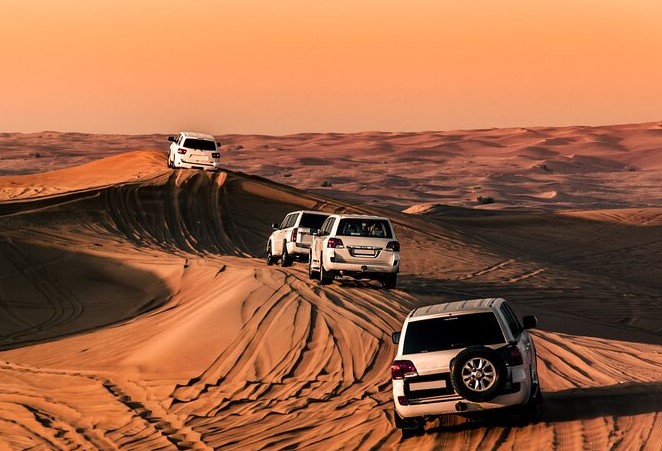
You are sitting in the passenger seat of a heavily modified 4×4, strapped into a four-point racing harness. Up ahead, a wall of crimson sand rises like a frozen, 200-foot tidal wave against a blindingly blue sky. The driver drops the transmission into low-range four-wheel drive, the engine screams at 4,000 RPM, and suddenly you are climbing a slope so steep that all you can see through the windshield is empty air. Just when you think the vehicle is about to tip backward, the nose crests the ridge, gravity catches up, and you plunge down the other side like a rollercoaster operating in slow motion.
If you think deserts are just flat, boring expanses of empty dirt, you are missing out on one of the most dynamic playgrounds on earth.
Over my last ten years of exploring the globe, I have crossed the arid expanses of the Sahara, the Namib, and the Middle Eastern dunes. What I discovered is that high-quality desert sand dune tours are masterclasses in physics, geology, and pure adrenaline.
However, many beginners book these trips expecting a gentle, scenic drive, only to end up severely carsick, sunburnt, or stranded in a vehicle buried axle-deep in shifting sands. Transitioning from a casual tourist to a seasoned desert adventurer requires understanding how these extreme environments actually work.
The Dynamic Science Behind Shifting Sands
To the untrained eye, a desert looks like a permanent landscape. In reality, it is a fluid, hyper-dynamic environment. Think of a sand dune field as an ocean frozen in time, where wind gusts act as the currents shaping the giant waves of sand.
When you book desert sand dune tours, you are navigating structures defined by wind velocity, sand supply, and local topography.
Decoding Dune Anatomy
Understanding the basic types of dunes will help you appreciate the technical skill required by your drivers and guides to navigate them safely:
-
Barchan Dunes: Crescent-shaped dunes formed by winds blowing consistently from one direction. The steep face is always on the downwind side.
-
Star Dunes: Massive, multi-pointed sand mountains formed in areas where winds shift from all directions. These are the giants of the desert, often rising hundreds of feet.
-
Linear Dunes: Long, straight ridges of sand that run parallel to strong, bidirectional winds.
During a trek through the Namib Desert, my local guide demonstrated a concept called the angle of repose. This is the maximum angle (typically around 30 to 34 degrees) at which loose sand can remain stable without sliding down. When a 4×4 crests a dune, the driver must calculate this angle instantly to avoid triggering a mini-avalanche that could trap the vehicle.
The Mechanics of Off-Roading: How Professionals Conquer the Dunes
If you take a standard rental SUV straight into the dunes without preparation, you will be stuck within the first fifty yards. True desert sand dune tours rely on precise mechanical adjustments before a single tire touches the sand.
+--------------------------+---------------------------------------------------------+
| Technical Factor         | The Desert Modification Required                        |
+--------------------------+---------------------------------------------------------+
| Tire Pressure            | Deflated from 35 PSI down to 12-15 PSI for traction.    |
| Gear Selection           | Low-range 4WD (4L) to maintain high engine torque.      |
| Driving Line             | Perpendicular to the ridge; never drive sideways.      |
| Vehicle Cooling          | Heavy-duty radiators to manage extreme engine heat.     |
+--------------------------+---------------------------------------------------------+
The Magic of Deflation
The single most critical step of any dune excursion is dropping the vehicle’s tire pressure. By dropping the air pressure from a standard 35 PSI down to roughly 12 to 15 PSI, the tire flattens out against the ground.
This creates a massive “footprint” that distributes the vehicle’s weight over a much larger surface area. It is the exact mechanical equivalent of swapping out high heels for snowshoes, allowing the heavy 4×4 to float on top of the loose granules rather than digging its own grave.
Choosing Your Adventure Style: From Adrenaline to Culture
Modern desert sand dune tours cater to a wide range of comfort zones. Understanding what type of tour fits your skill level is vital for an optimal experience.
Dune Bashing and Sandboarding
For the adrenaline seeker, “dune bashing” packages in custom V8 trucks offer heart-pounding thrills. This is often paired with sandboarding—which uses modified snowboards with specialized wax applied to the base to smoothly glide down the steep slip-faces of high dunes.
Overlanding and Bedouin Camps
If you prefer a slower, more immersive pace, intermediate tours focus on multi-day overlanding expeditions. These tours transition from high-speed driving to slow, technical navigation, leading you to remote, eco-friendly camps. Here, you can experience the intangible heritage of desert cultures, listening to traditional storytelling under a night sky entirely free of modern light pollution.
Expert Advice: Pro-Tips and Hidden Warnings for Your Tour
-
Pro-Tip #1: Timing is Everything for Photographers. The worst time to explore the dunes is midday. The overhead sun flattens the landscape, erasing all shadows and making the desert look like a bright white sheet. Opt for sunrise or sunset tours when the low-angle sun casts deep, dramatic shadows over the ridges, highlighting the razor-sharp crests of the dunes.
-
Pro-Tip #2: Protect Your Technology. Desert sand is incredibly fine and behaves like liquid dust. It will find its way into your camera lenses, charging ports, and watch gears. Never change camera lenses in the open air; use weather-sealed gear or keep your smartphones sealed inside clear, protective ziplock bags when not actively shooting.
-
Hydration Deception. The humidity levels in major sand seas can drop to less than 10%. Because the dry air evaporates your sweat instantly, you will not feel wet or hot like you would in a humid jungle environment. This leads to rapid, hidden dehydration. Drink water constantly—at least one liter every two hours—even if you do not feel thirsty.
Embrace the Wild Silence of the Sands
Stepping onto well-curated desert sand dune tours is an experience that radically shifts your perspective on the natural world. It is a harsh, unforgiving landscape, yet it holds a strange, serene beauty that stays with you long after you shake the sand out of your shoes. By respecting the climate, hiring expert local drivers, and embracing the unique physics of the terrain, you unlock an unforgettable wilderness frontier.
Have you ever witnessed a true desert sunset, or felt the rush of sliding down a massive sand dune? Or perhaps you are planning your first trip to an arid region and have questions about what gear to bring? Drop a comment down below—I would love to help you plan your next great escape!